France · 9 min
What French Beauty Brands Should Ask a Thermoformed Tray Supplier
For beauty packaging, the tray is both a protective component and part of the brand presentation. These questions reduce risk before tooling.
TRAYVORA Packaging Team · Updated July 2026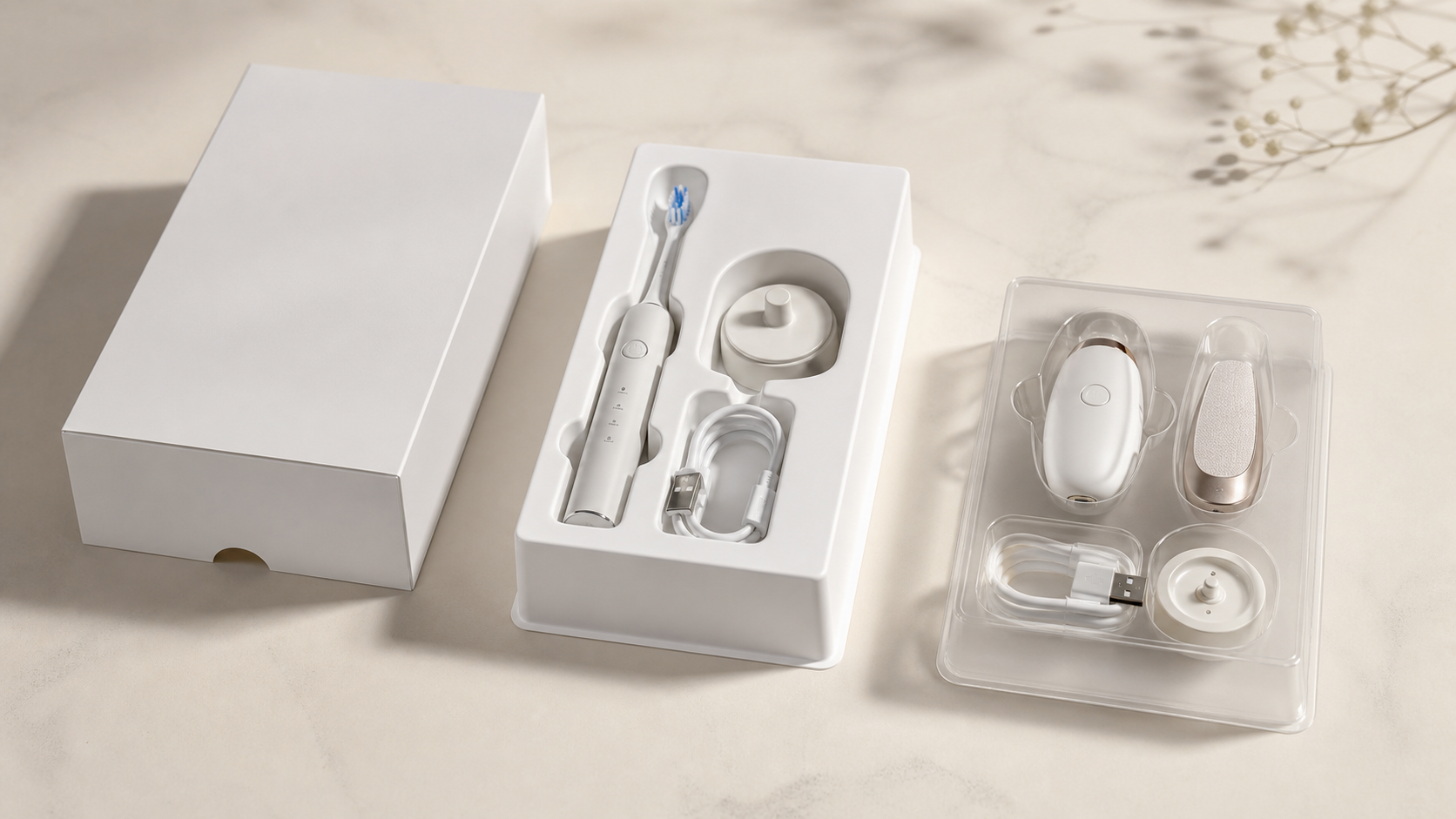
01
Can the supplier translate presentation into a formable tray?
A tray may need to center a perfume bottle, align a skincare set and create a controlled unboxing sequence. Share the product drawing, closure dimensions, decoration zones, weight, carton and first viewing angle—not only a mood board.
Ask how the visual concept becomes support points, draft, radii and tooling features. A good supplier should identify details that may cause distortion, unstable forming or difficult removal before the tool is approved.
02
How are decorated surfaces protected?
Lacquered bottles, metallized closures and high-gloss components can show small rub marks. Define no-contact areas and acceptable support locations. A tighter fit is not automatically better when vibration and dimensional variation can turn pressure into a visible defect.
Validate with final decorated components rather than undecorated engineering samples. Review retention, product movement, cleanliness and removal as separate quality points.
03
Which material and finish support the concept?
Beauty trays may be clear, tinted, opaque, matte or glossy. Ask for representative formed samples because deep cavities and transitions can change gloss, tint and thickness distribution. Agree on lighting, reference samples and acceptable color variation.
Write sustainability goals as measurable requirements. Recycled content, downgauging and easy separation from paperboard can each help, but must be validated against appearance and protection.
04
Will the tray work with the carton and packing line?
Flange, height, corners and retention must match the carton, sleeve, booklet and assembly sequence. Share the carton dieline and tolerances. For automation, define datums, pick areas and orientation; for manual assembly, time a packing trial.
Check that nested trays separate, the pack remains level and finger access still works after the tray enters the carton.
05
What do prototypes and quality criteria prove?
A rendering validates presentation, a concept sample helps assess scale, and a production-intent sample provides stronger evidence for formed appearance and fit. Ask the supplier to state what each stage can and cannot prove.
Replace vague words such as premium or clean with agreed limits for critical dimensions, visible zones, particles, color, trim and flange flatness. Use an approved reference sample together with drawings and written criteria.
06
What evidence supports environmental claims?
Request composition, component weight and recycled-content evidence for the actual tray. Do not assume one material attribute makes the complete package recyclable in every French collection stream.
French and European requirements can change and depend on the party placing the package on the market. The brand should verify current obligations and consumer claims with qualified specialists; the supplier should provide precise product data and control substitutions.
COMMON QUESTIONS
Practical answers.
What tray works best for luxury cosmetics?+
It depends on product weight, decoration, carton, unboxing and material goals. Compare clear, tinted and opaque formed samples against the full brief.
How can trays reduce scratches?+
Place gentle support on approved surfaces, control movement and validate with final decorated parts across realistic tolerances.
Can recycled content suit a premium tray?+
Potentially. Review appearance, forming consistency, supply and documentation using representative samples.
Should the supplier receive the carton dieline?+
Yes. The tray and carton form one system; dielines, internal dimensions and assembly order prevent bulging and poor alignment.